Templates · Dashboard and stats screens
Music app dashboard and stats screens
27 dashboard screens from 19 music app templates, each in its own design language. Music apps are led by artwork: covers, waveforms and a player that stays in reach while you browse.
The examples
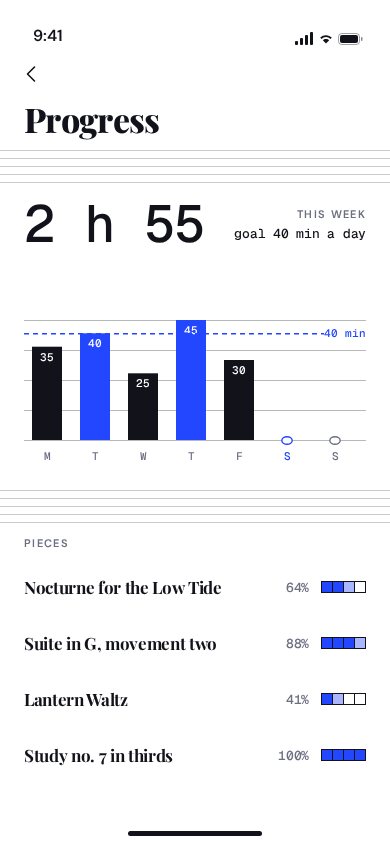 Quire Progress: Sheet music and practice, Minimal
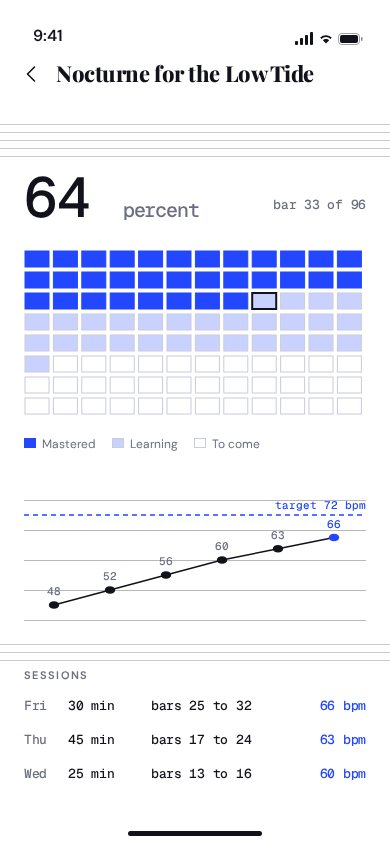 Quire Piece progress: Sheet music and practice, Minimal
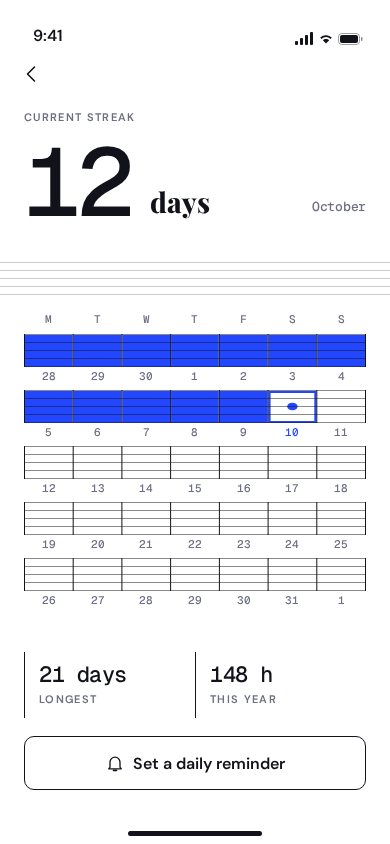 Quire Streak: Sheet music and practice, Minimal
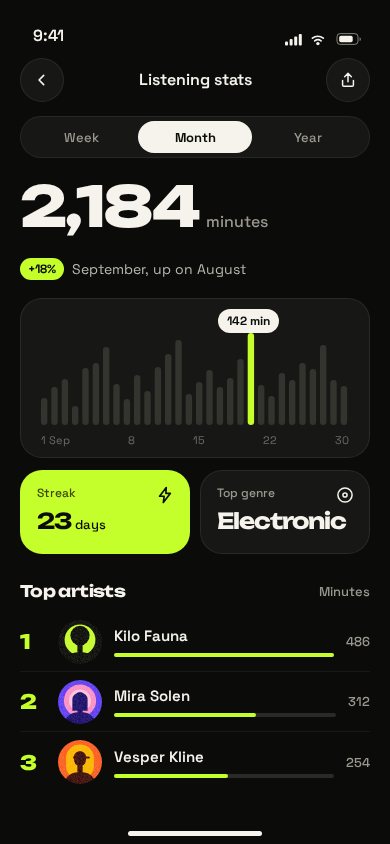 Wax Listening stats: Music streaming, Dark-first, dark
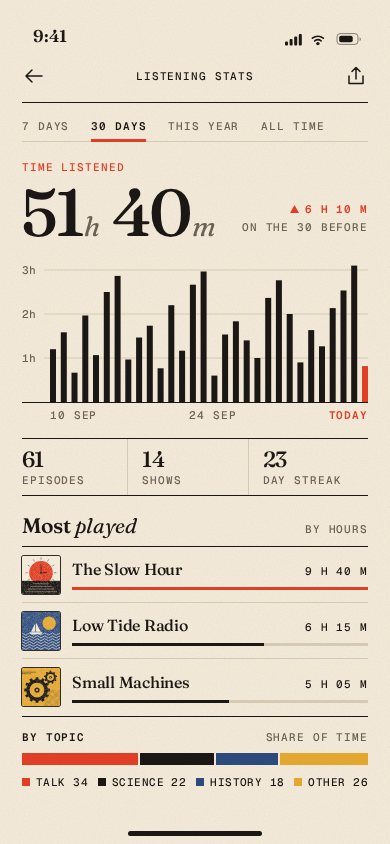 Earshot Listening stats: Podcast player, Minimal
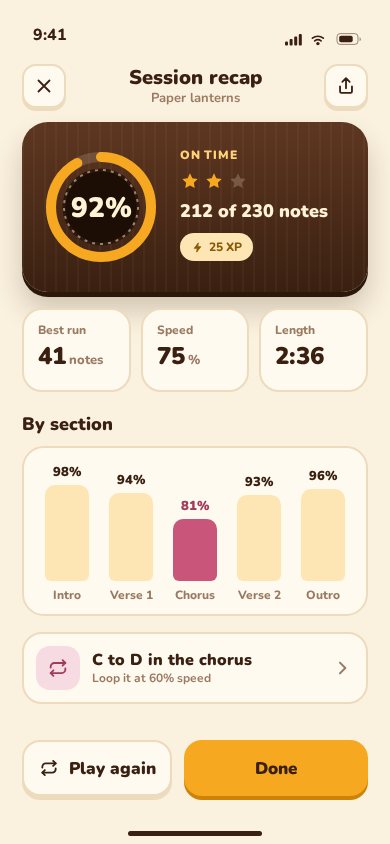 Strum Session recap: Learn guitar, one chord at a time, Playful
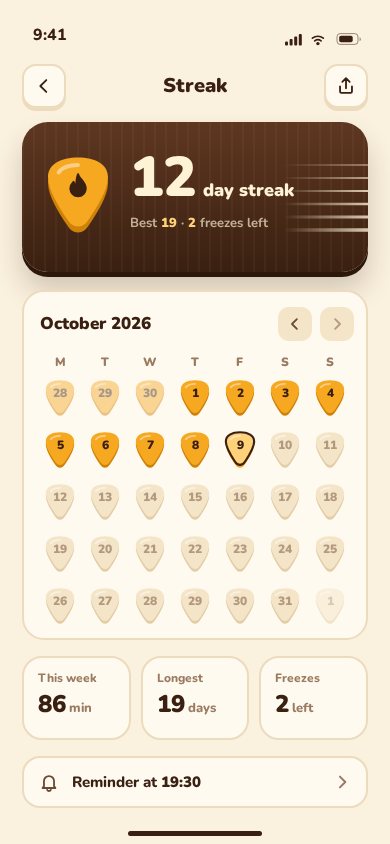 Strum Streak: Learn guitar, one chord at a time, Playful
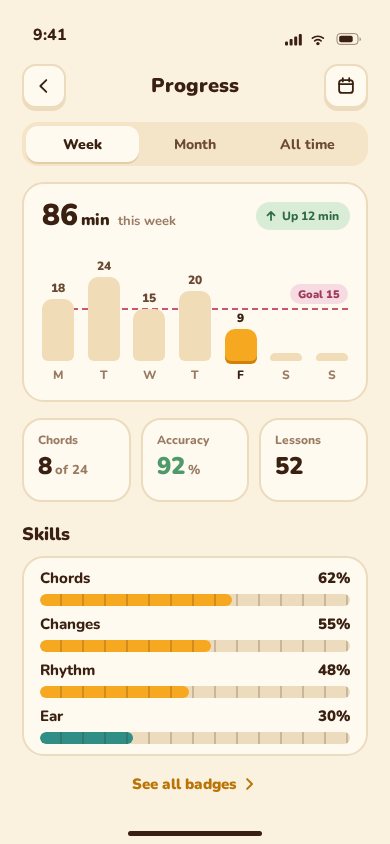 Strum Progress: Learn guitar, one chord at a time, Playful
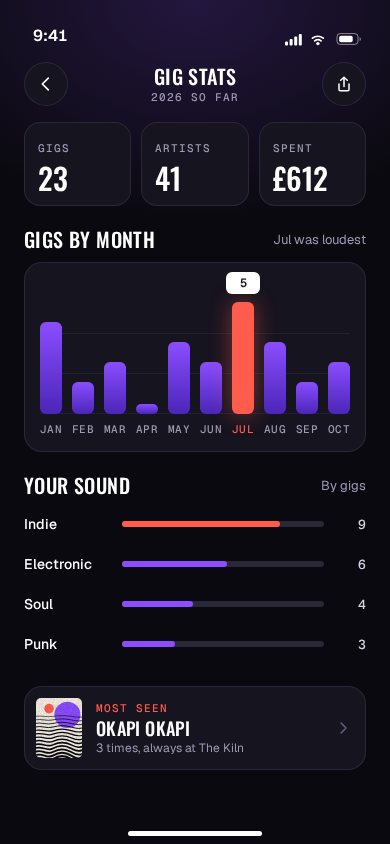 Gigly Gig stats: Gig and festival tickets, Gen Z, dark
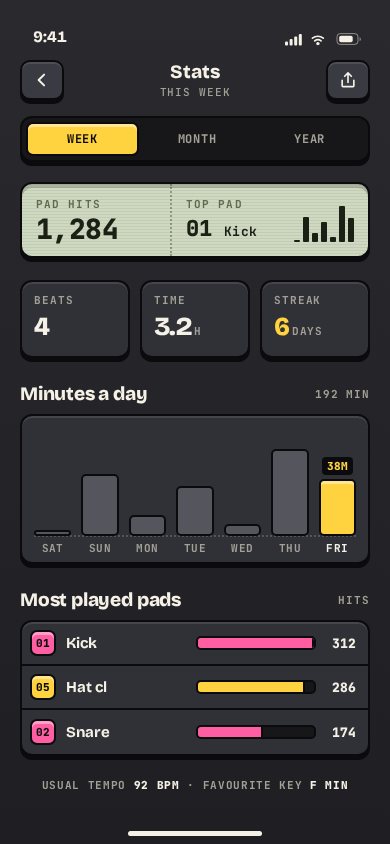 Padd Stats: Beat maker, Neubrutalism, dark
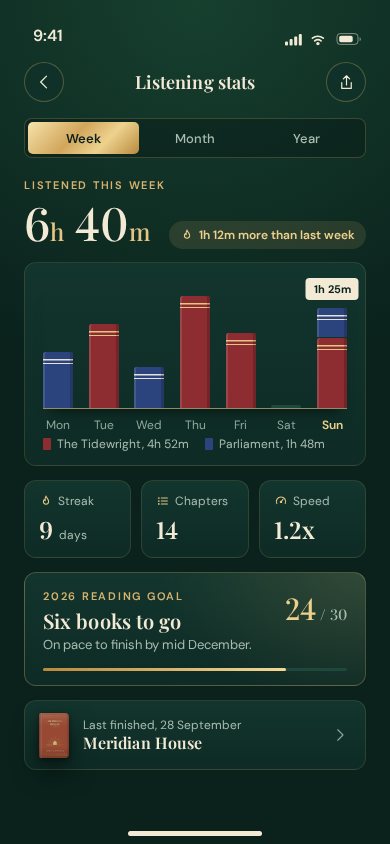 Aria Listening stats: Audiobook library, Luxury, dark
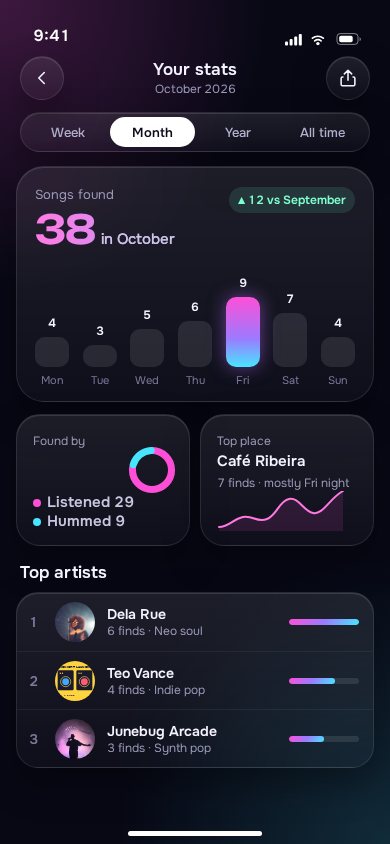 Hum Stats: Song recognition, Glass, dark
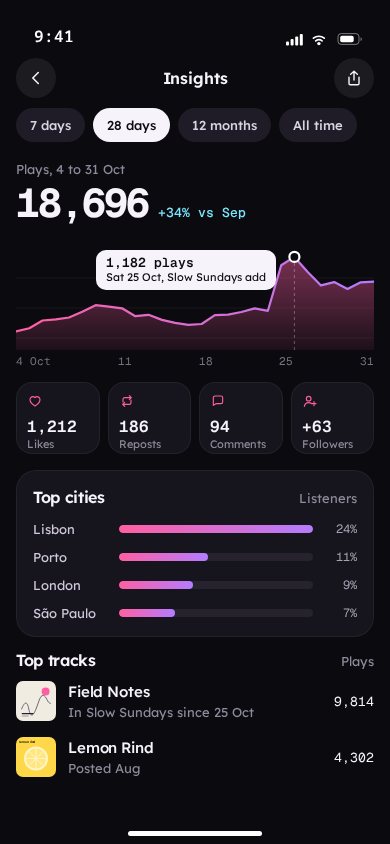 Riff Insights: Upload and discover new tracks, Dark-first, dark
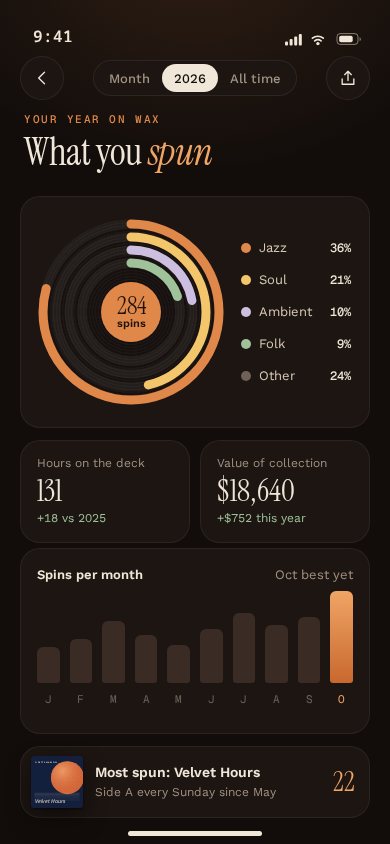 Groove Stats: Vinyl collection and crate digging, Luxury, dark
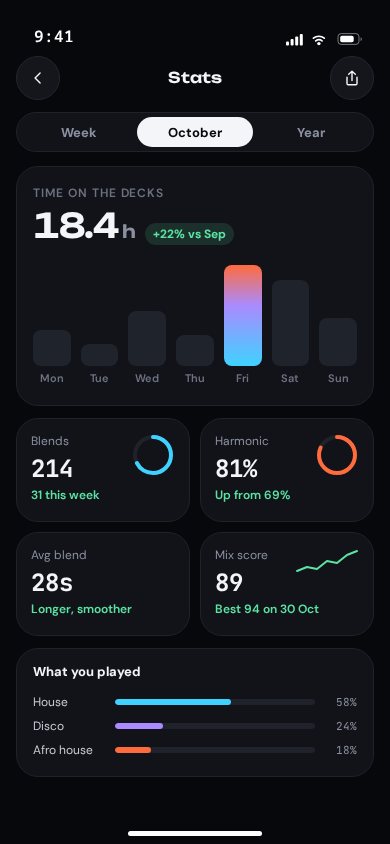 Crossfade Stats: DJ mixing on the go, Dark-first, dark
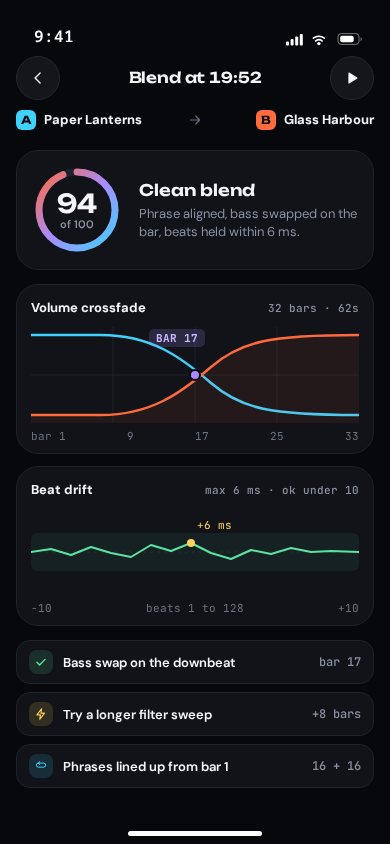 Crossfade Transition: DJ mixing on the go, Dark-first, dark
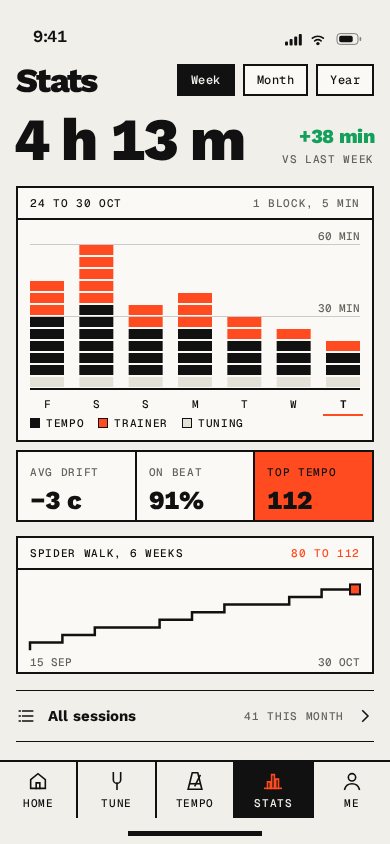 Fork Stats: Tuner and metronome, Brutalist
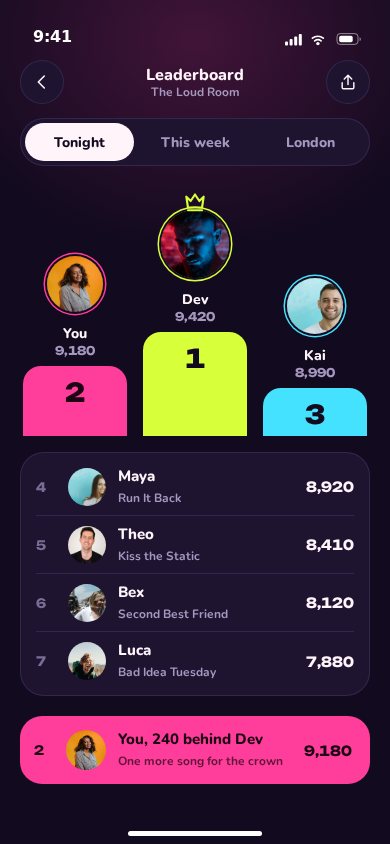 Belt Leaderboard: Karaoke nights, Gen Z, dark
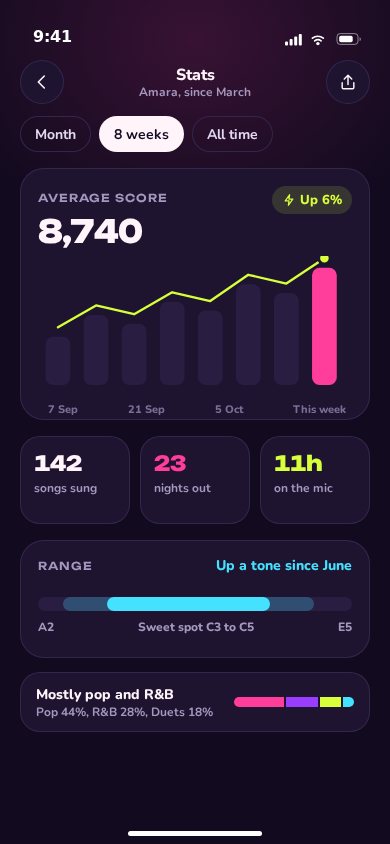 Belt Stats: Karaoke nights, Gen Z, dark
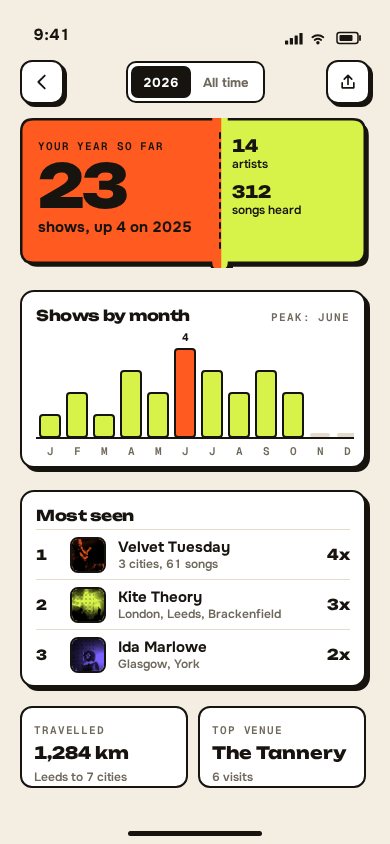 Crowd Stats: Concert diary and setlists, Neubrutalism
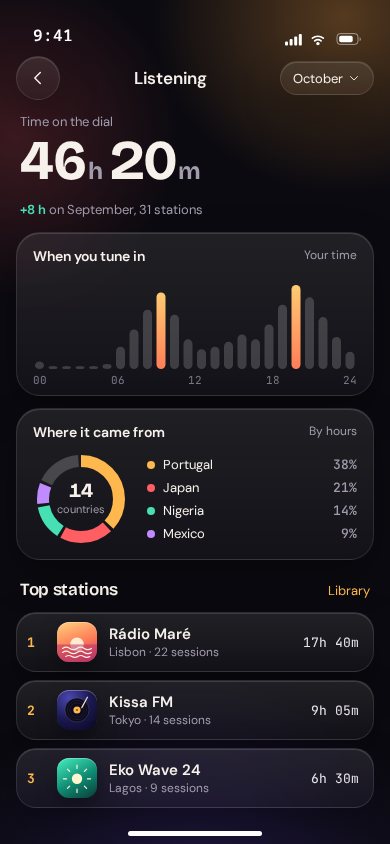 Dial Listening: Internet radio from everywhere, Glass, dark
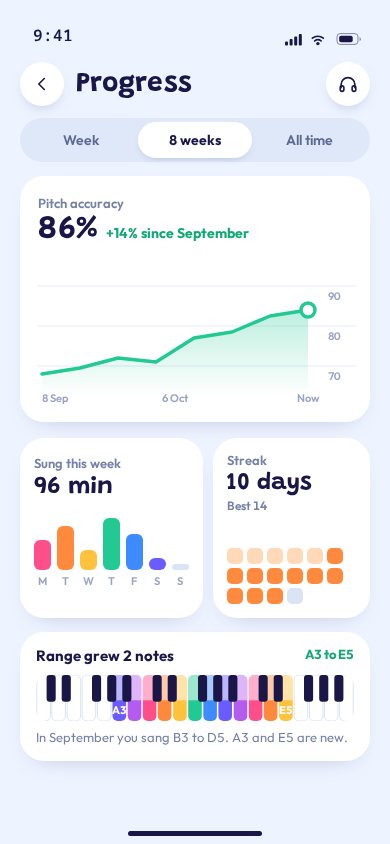 Chorus Progress: Singing lessons and pitch training, Playful
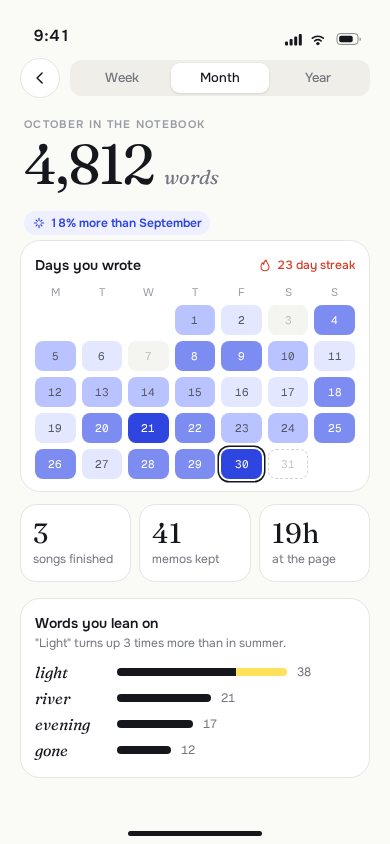 Verse Stats: Songwriting notebook, Minimal
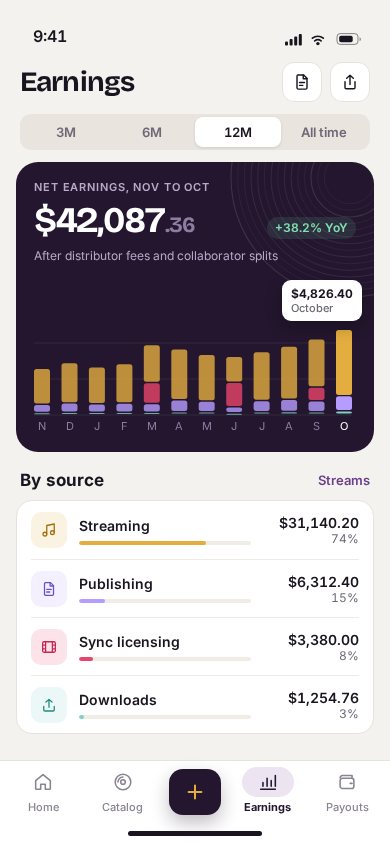 Masters Earnings: Royalties and streams for artists, Enterprise
- Masters Streams: Royalties and streams for artists, Enterprise
- Masters Territories: Royalties and streams for artists, Enterprise
- Sonata Your season: Concert hall season and tickets, Clinical
What makes a good music app dashboard screen
- One headline number. The figure that matters most, like balance, steps or revenue, large at the top with its change since the last period.
- Give numbers context. Compared with last week, against a goal or as a trend line. A number alone does not say if it is good.
- Pick simple charts. Bars for comparing periods, lines for trends and rings for progress toward a goal. Avoid charts that need a legend to read.
- Let people change the period. Day, week, month and year as a segmented control above the chart.
- Turn data into insights. One sentence like "You spent 20% less on food this month" is easier to act on than a chart.
- Make every number tappable. Tapping a figure or a chart should open the detail behind it, such as the transactions in a category or the workouts in a week.
The full dashboard screen guide: layouts, mistakes and questions
Dashboard and stats screens in other kinds of app
- Productivity app dashboard and stats screens (94)
- Lifestyle app dashboard and stats screens (78)
- Finance app dashboard and stats screens (72)
- Fitness app dashboard and stats screens (71)
- Social app dashboard and stats screens (52)
- Sports app dashboard and stats screens (50)
- Travel app dashboard and stats screens (49)
- Education app dashboard and stats screens (40)
- Smart home app dashboard and stats screens (34)
- Food app dashboard and stats screens (32)
Other music app screens
- Music app onboarding screens
- Music app sign in and sign up screens
- Music app home screens
- Music app search and explore screens
- Music app list and feed screens
- Music app detail screens
- Music app booking and checkout screens
- Music app paywall screens
- Music app success and confirmation screens
- Music app profile screens
- Music app settings screens
- Music app player, camera and editor screens
- Music app live tracking screens
- Music app form and input screens